
Your Hotel Needs a Story, not Just a Logo
Ask any guest why they chose a hotel.
They won't mention the logo. They’ll be more likely to say: "I heard the building used to be…" or "my friend stayed there and said it felt like nowhere else" or just "I don't know, I had a feeling about it."
That feeling has a source. It's the story.
Brand development is sometimes treated as decoration — the logo on the key card, the color on the website, the font on the menu. But when a guest tells a friend where to stay, they're not describing the logo. They're telling a story. Make sure your property gives them one worth sharing.
Consider Hotel IVY, which sits steps from Boston Common — one of the most storied places in the Northeast. Other hotels may have reached for the obvious: colonial details, Freedom Trail references, a tasteful nod to Paul Revere. We went in a different direction. The birthplace of Edgar Allan Poe was next door and that detail, when we found it, changed everything. The brand we built for them has a mascot: Allan the Raven. A witty, literary character that balances the property's academic ambition with a sense of humor, expressed through a bold geometric logotype and an electric blue and
orange palette.
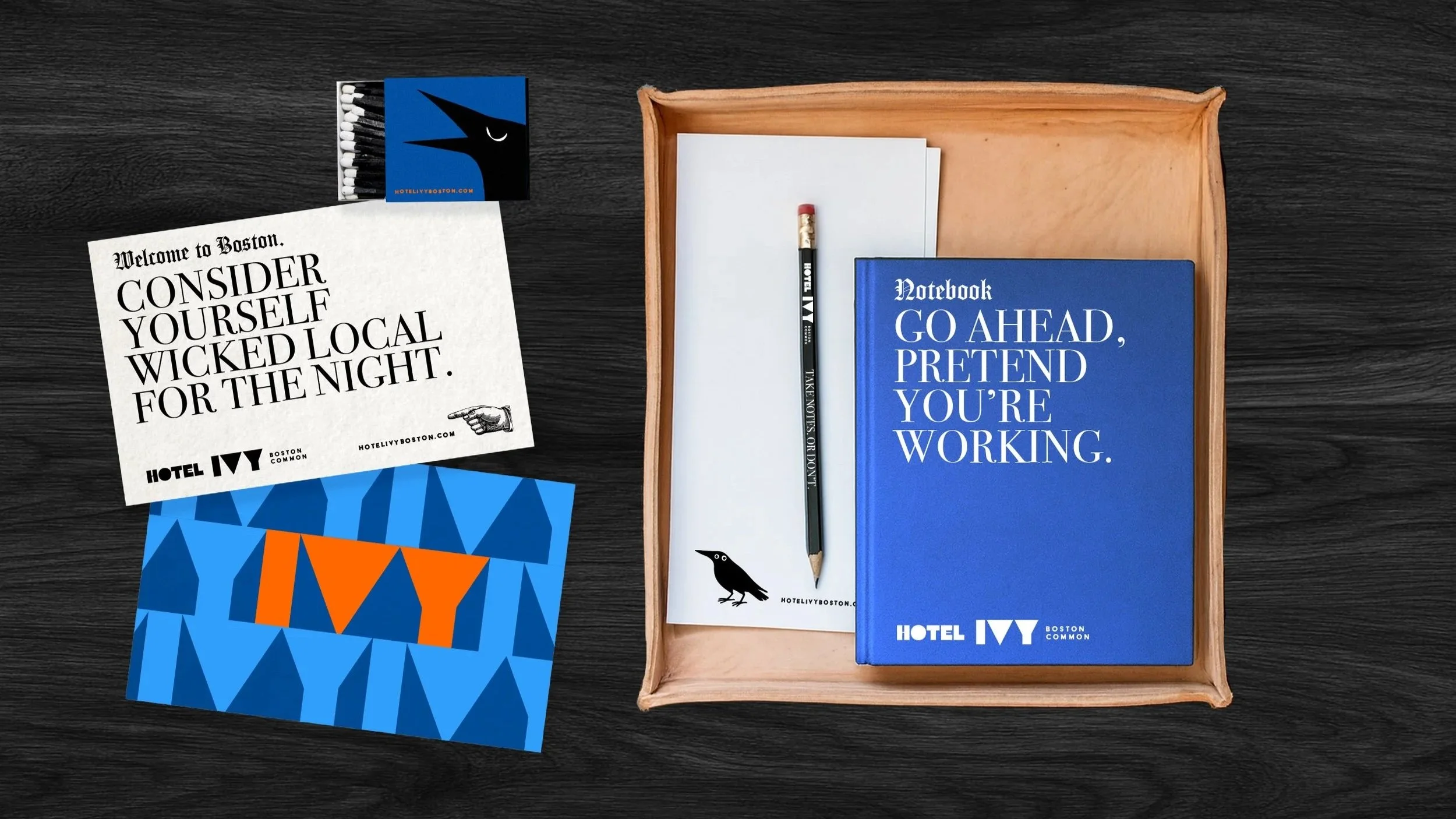
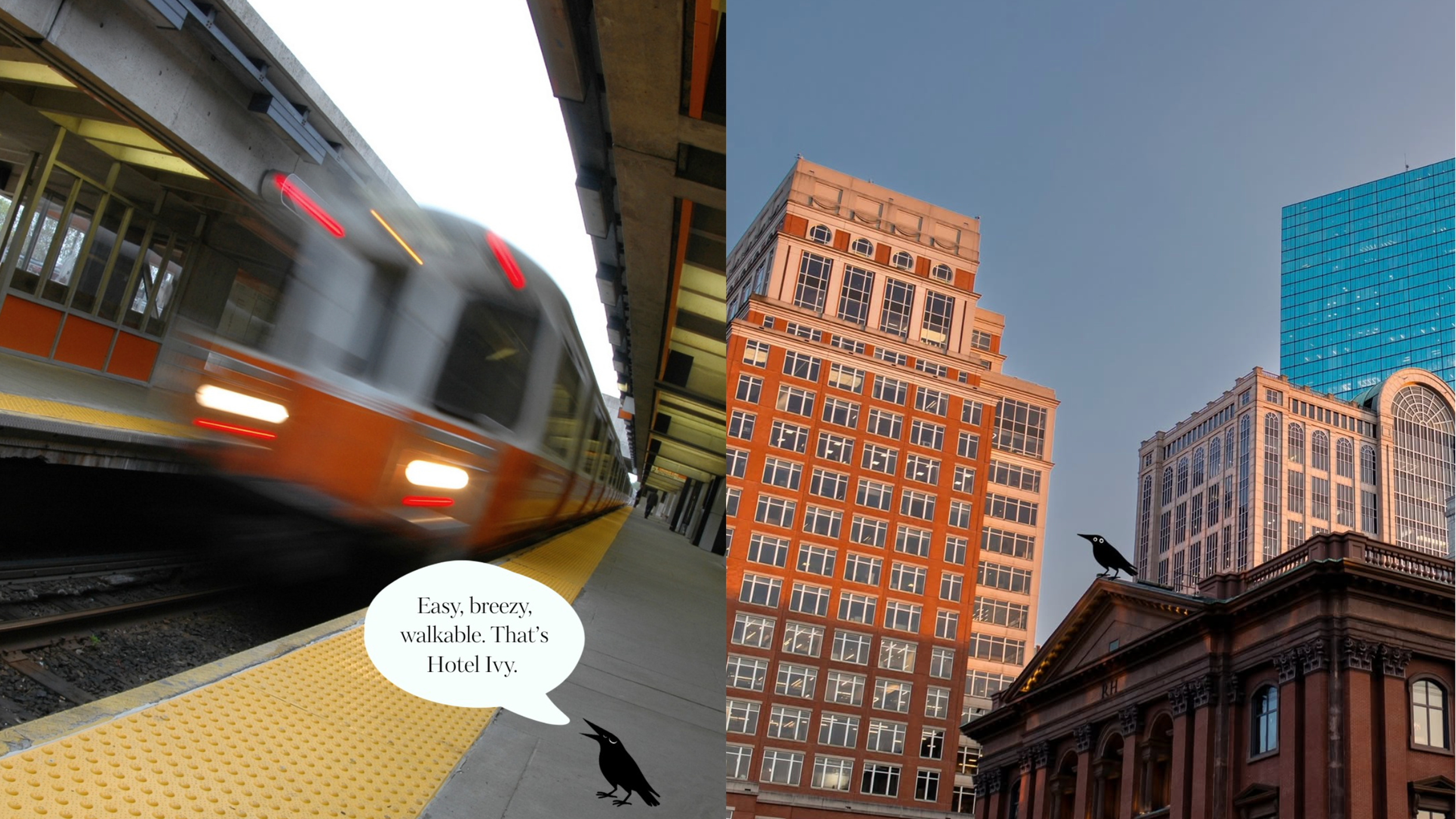
2 recent social media posts courtesy of Hotel IVY. Can you spot Allan?
Guests get to meet Allan. They ask about him. They take photos of him. They tell people about him before they tell them about the room. That's what earns a review that someone actually reads before choosing where to stay. That's what turns a first time visitor into a regular.
A logo can't do any of that. It can remind someone of the story after they already know it. But it can't be the story.

At the Hotel David Whitney in Detroit, the obvious story was the architecture — one of only three buildings in the city designed by the legendary Daniel Burnham, commissioned by lumber baron David Whitney Jr. at the height of his fortune. While we did celebrate that, one of the most memorable stories we tell about the brand came from the archives of a company most guests have never heard of.
At the turn of the century, the Detroit Publishing Company held the exclusive American rights to Photochrom, a Swiss process that turned black-and-white photographs into vivid, hand-tinted color years before color photography existed. Detroit is where the color postcard boom started.
We turned that into a guest ritual. Each room holds three postcards, reproduced from the company's original 1915 archives and already stamped. Guests write them, then carry them down to the hotel's historic atrium mailbox — the original, still in daily use — and drop them in.
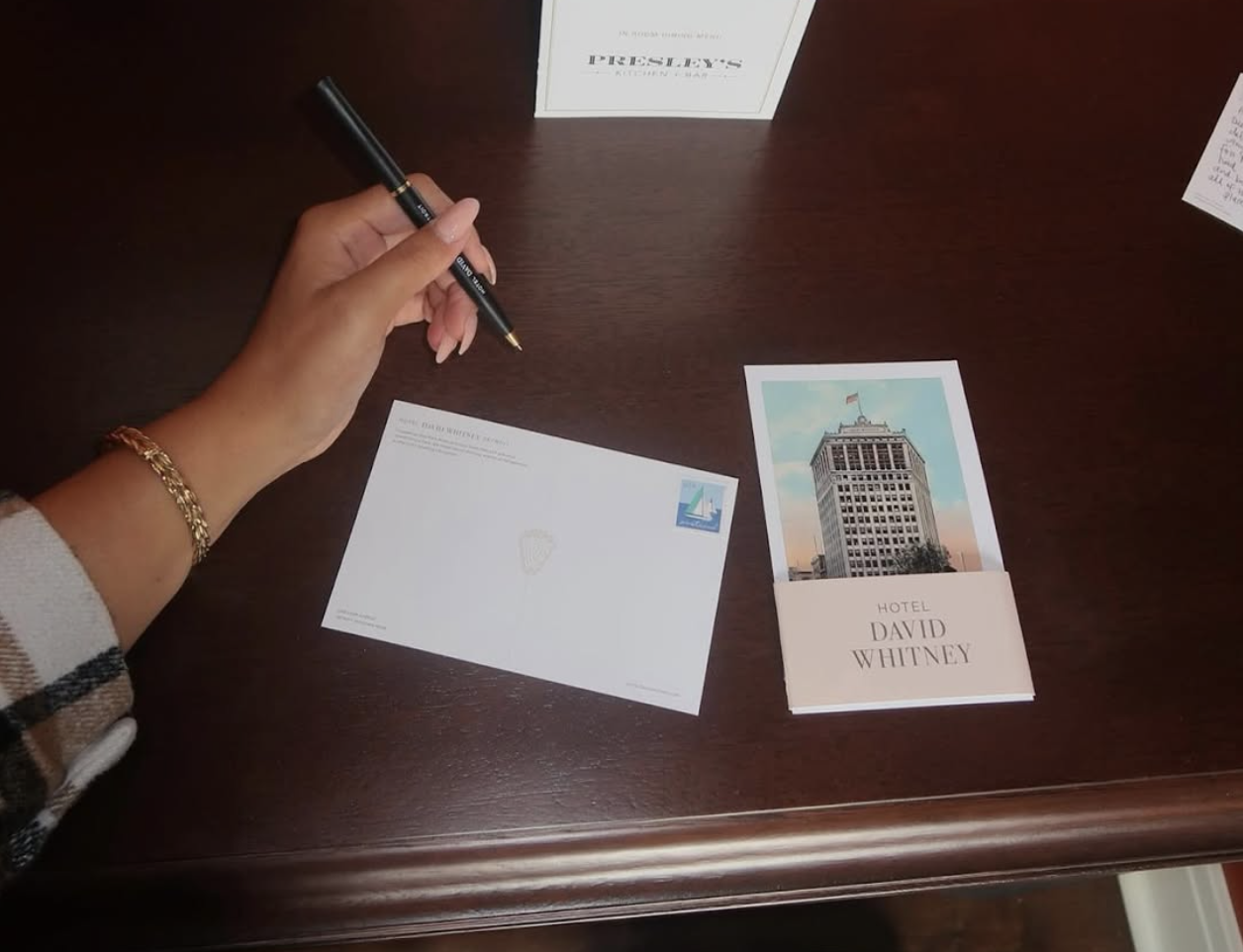
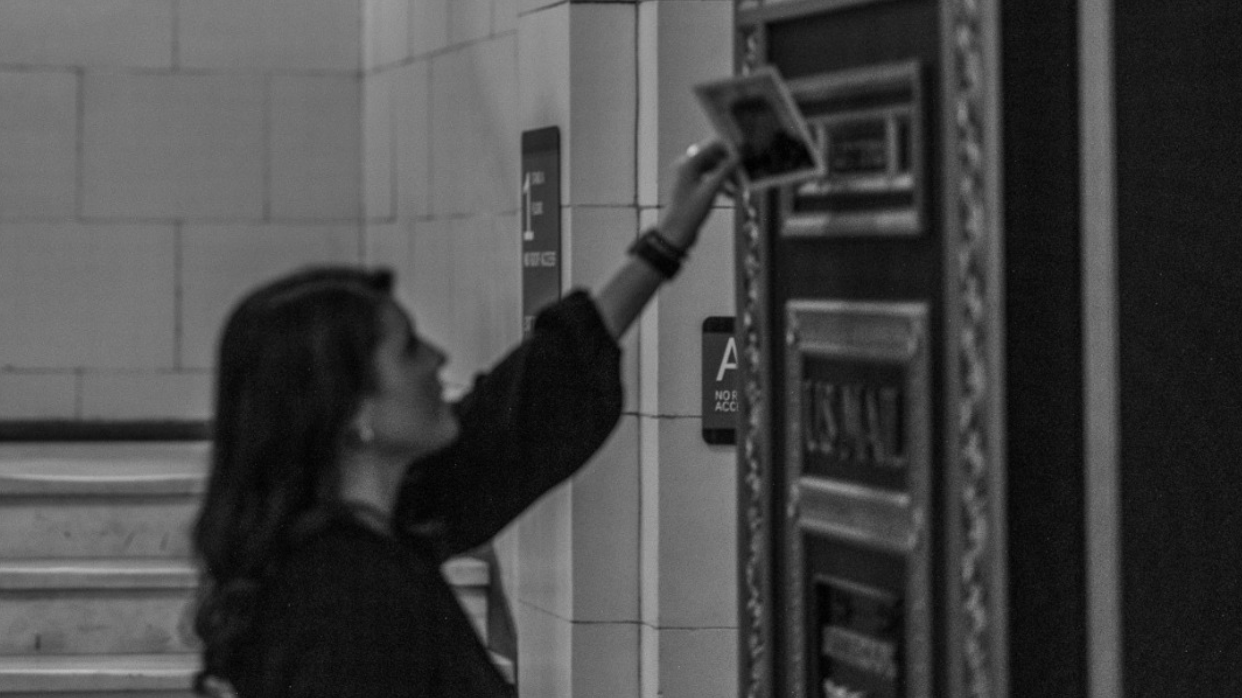
Images Courtesy of Hotel David Whitney on Instagram
Spaces throughout the hotel carry the same instinct: residential in scale, celebratory in spirit, in keeping with Whitney's taste for entertaining. The mezzanine library is a favorite quiet corner; the lobby bar anchors the atrium as its social center. The postcards are what get shared most.
History like that stops sitting on a plaque and starts becoming a narrative that people actively want to be part of. A hotel that taps into that gives guests something to feel good about choosing — and something worth mentioning when they get home.
That is te best kind of marketing, the kind you can't buy.
There is a spirit to the best hotels. You can feel it immediately when you walk in. You can't always name what it is, but you feel it — the sense that this place knows exactly what it is and isn't trying to be anything else. That's what happens when the brand grows out of the place, rather than getting applied to it from the outside.
A property like that doesn't need to sell itself very hard. The story does the work for it.
Ready to craft the story your property deserves?